Property Tax Amendment Resources for Nonprofits
Looking for general information on Amendment 3 or its estimated impact to Florida's nonprofit sector? Visit FNA's Property Tax Resource Center.
This page and the resources included below are designed to help nonprofit leaders engaging in conversations, operational decision making, or advocacy efforts related to Amendment 3. FNA is actively engaging with our members and other nonprofits throughout the state to ensure we provide timely, factual, and actionable resources through the election season. Check back regularly for new information.
If approved by voters in November, Amendment 3 will likely cause significant challenges for the nonprofit sector. Local governments, who not only directly fund the work of nonprofits, but also serve as crucial community partners will be forced to make difficult, constitutionally-mandated budgetary decisions due to the sudden loss of property tax revenue. Meanwhile, potential cuts to existing public programs would result in increased demand for nonprofits at a time where rising costs and reduced funding have already left many organizations stretched thin.
As you navigate the coming months its important to remember nonprofit leaders are often among the most trusted voices in their communities. When used effectively, that voice can be pivotal to understanding and conveying the potential impacts of Amendment 3 to your staff, board, clients, volunteers, and peers.
- 57% of Americans report high trust in nonprofit organizations. Trust in nonprofits is higher than in any other sector, including small businesses, the military, philanthropy, government, or the media.
- Nonprofits are also perceived as more competent and ethical than foundations, corporations, media, or government.
- 8 in 10 voters (81%) trust nonprofits to engage in policy work that cuts through the mess of politics and serve their community in a nonpartisan way — including at least 78% of Republicans, Democrats, and Independents.
Tools for Nonprofit Organizations
Use the resources below to help your organization evaluate potential impacts, facilitate internal discussions, communicate with stakeholders, and determine what level of engagement is appropriate for your organization.
Amendment 3 Messaging Toolkit
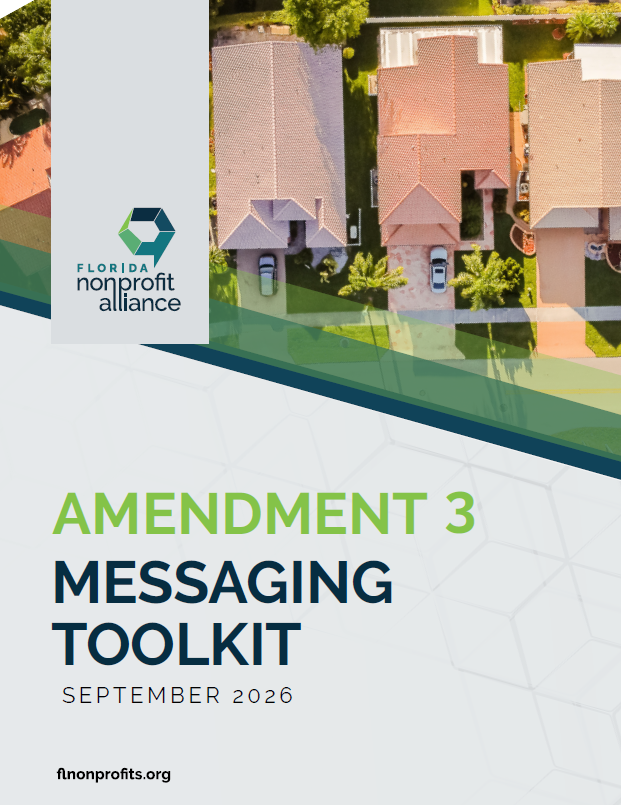
AMENDMENT 3 MESSAGING TOOLKIT
Explore Amendment 3 messaging guidance and communications resources developed with the help of statewide research and nonprofit organizations from throughout the sector.
Toolkit includes:
- Key messages and framework for making them relevant to your organization
-Guidance on launching a successful advocacy campaign
-Sample Op-Ed Template
-Customizeable social media templates.
Download
FNA developed the Amendment 3 Messaging Toolkit to help nonprofits form a strategy and an organizational message framework for communicating about the ballot measure. The toolkit includes shared messaging, audience-specific guidance and materials organizations can customize for their own communications.
The resources are designed to work together while leaving room for every organization to tell its own story. Use these to communicate potential impacts, engage voters in your community, or even prepare staff and board members to talk about the issue. Download the toolkit through the link above, or learn more by clicking here.
Download links for Spanish and Haitian Creole translations of toolkit resources can be found here.
Organization Discussion Questions
Use this discussion guide to start meaningful internal discussions about the proposed amendment. These questions can also help you identify potential impacts and areas where additional information, guidance, or support may be helpful for your organization.
FNA Trainings and Webinars
FNA is hosting a series of webinars leading into election season, providing important information about advocacy work and voter engagement. These webinars are categorized into three learning tracks; Voter Engagement, Property Tax – Learning, and Property Tax – Advocacy and Lobbying. Visit our Event Calendar page to explore all upcoming events and courses in each learning track.
Options for Getting Involved
As your nonprofit organization decides whether to get involved in the proposed property tax amendment, consider the different options you have:
- Choose not to engage as an organization
- With this option, you can still plan to get involved as an individual, by voting and educating other voters.
- Continue to learn about the proposed amendment
- Participate as an organization with an advocacy strategy, with tactics like sharing information about the amendment, the pros and the cons, including how it would affect your organization or your local community.
- Participate as an organization with a lobbying strategy - your organization comes out with a specific statement in support or opposition to this amendment. You can then share that statement with voters.
Suggested Timeline for Engagement
July 9-31 - Complete the Property Tax Impact Survey.July - Reach out to local entities to see how the amendment may affect your organization.By July 31 - Decide if and how your organization will engage on this issue. (See discussion guide below)August - If you are engaging in advocacy or lobbying, plan your communication strategy on property tax.August 19 - Property tax communications go full force (after primary elections)By September 1 - If you are engaging in advocacy or lobbying, communication strategy on property tax in full swing.- September - If you are engaging in advocacy or lobbying, plan your strategy around voter engagement.
- By October 1 - If you are engaging in advocacy or lobbying, voter engagement strategy in full swing.
- October 5 - Voter Registration Deadline
- October 22 - Deadline to request a vote-by-mail ballot
- October 24-31 - Mandatory Early Voting Period (may have extended dates in some counties)
- November 3 - General Election Day (proposed amendment on the ballot)
Additional Resources
Advocacy Overview
As organizations engage stakeholders around this issue, it is important to understand the rules governing advocacy, lobbying, and voter engagement activities.
Florida Nonprofit Alliance offers a variety of resources to help organizations participate confidently and effectively while remaining compliant with applicable laws and regulations.
If your organization is considering advocacy or voter engagement activities related to the property tax ballot measure, we encourage you to review these resources by visiting our Advocacy Overview page here.
Voter Engagement Guide
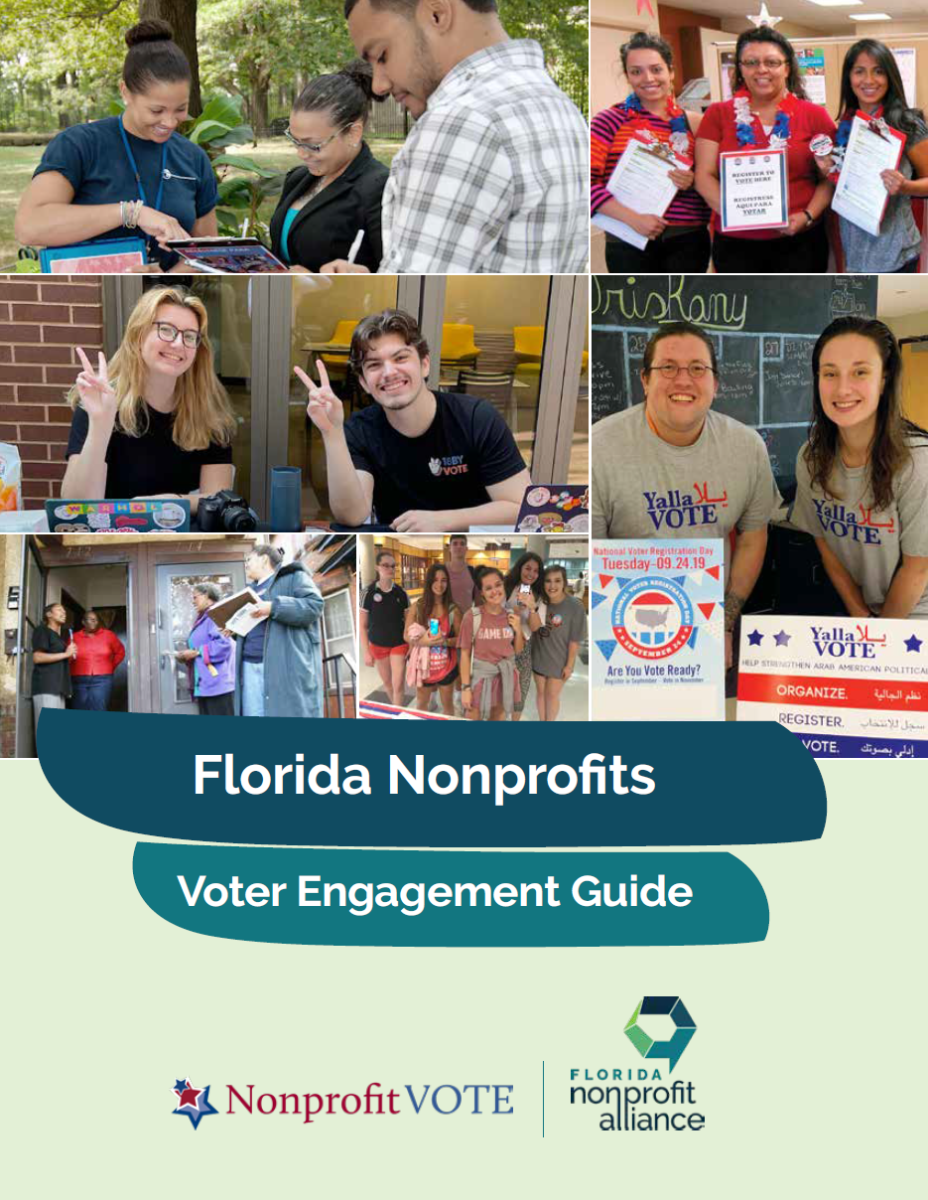
FLORIDA NONPROFITS VOTER ENGAGEMENT GUIDE
(Updated June 2026)
Whether it is your first time engaging potential voters or you are trying to deepen your existing work, this Voter Engagement Guide can support your way to a successful voter engagement initiative.
Download
When it comes to elections and voter engagement, there are some things that are not legal for nonprofits to do, and others that will need to be handled with caution. Download our recently updated Voter Engagement Guide below for more information.
Local Entities Potentially Affected
As you consider the effects on your organization, it is also helpful to reach out to other entities that may be affected by the proposed amendment. We recommend asking what information they are sharing about the amendment and what actions, if any, they are taking. It is also a good opportunity for combining efforts, working in informal coalition, and multiplying your messages. Other groups affected could include, but are not limited to:
- Public libraries
- Children Services Councils
- City and county governments
- Mosquito control
- Water management districts
- Public schools
- Animal control
- Hospitals
- Fire departments
- Police departments
- Sheriff offices
Request Support
Have a question or need additional assistance? Contact Florida Nonprofit Alliance to request resources or guidance related to your organization's specific circumstances.
Disclaimer
This page is intended for education and informational purposes only. It is not legal advice, and we encourage all public charities to consult with legal counsel about their particular situations.
It is also designed specifically for 501(c)(3) charitable organizations. If you are a private foundation or a different type of 501(c), we recommend consulting with a lawyer to be sure you are following the specific laws and regulations that apply to you.