
Proposed Property Tax Amendment Resource Center
Information and educational resources related to the proposed property tax amendment
On November 3, Florida voters will decide whether to approve a constitutional amendment that would increase the state's homestead tax exemption for non-school taxes, decrease the cap on how much the assessed value of non-homestead properties can increase each year, and limit how counties and municipalities can spend property tax revenue.
Property taxes provide a significant source of revenue for Florida's counties, municipalities, and certain special districts. These revenues support a wide range of local services and community investments, many of which are delivered directly by government or through partnerships with nonprofit organizations.
According to estimates from the Legislative Office of Economic and Demographic Research, Amendment 3 would result in a loss of nearly $5 billion in property tax revenue for local governments in 2027. Those losses would increase to nearly $8.8 billion in 2028, $9.7 billion in 2029, $10.75 billion in 2030 and almost $12 billion by 2031 as the
This significant shortfall, and the cuts to government-funded services that would occur as a result, has led many public-facing and community-focused organizations to strongly advocate against Amendment 3.
While reducing the tax burden on homeowners is an important goal, this amendment raises significant concerns about its long-term impact on local communities, and the services residents rely upon. The proposal does not provide sufficient clarity about how local governments would replace lost revenue and continue supporting public safety, infrastructure, parks, libraries, and other community priorities.
Florida's nonprofit sector works every day to address community need, often in partnership with local governments. We believe property tax relief should be pursued through thoughtful, targeted, and sustainable solutions that strengthen communities rather than weaken them. For these reasons, Florida Nonprofit Alliance does not support the proposed amendment and encourages Floridians to consider its long-term implications while exploring more effective approaches to providing property tax relief.
An expanded summary of each of the ballot measure's provisions can be accessed below:
Individuals who establish Florida residency after December 31, 2026, would receive a smaller homestead exemption before becoming eligible for the full expanded exemption after five years of Florida residency.
Impacts to Florida Nonprofits
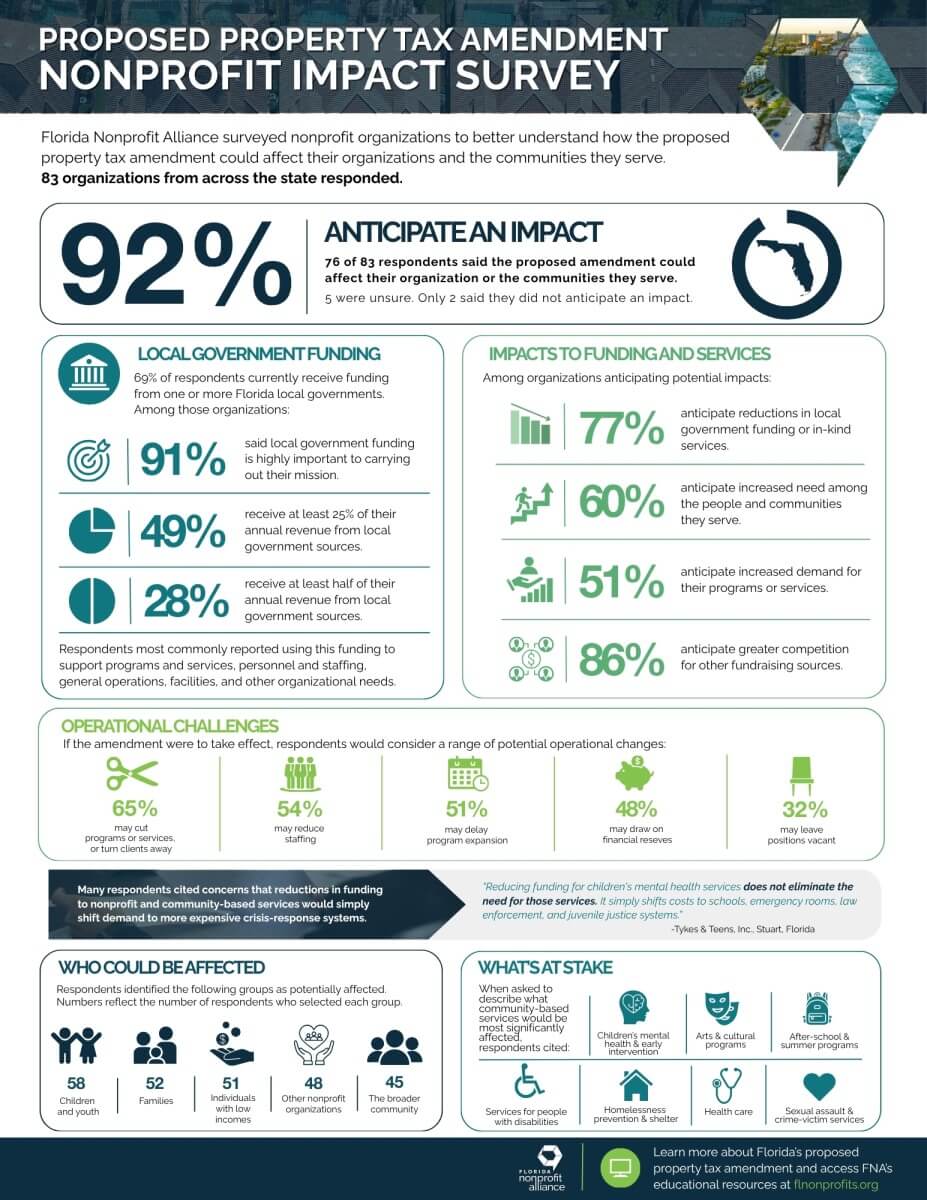
- Proposed Property Tax Amendment Nonprofit Impact Survey
In July, Florida Nonprofit Alliance conducted a survey to measure Amendment 3's impact to nonprofit organizations, the communities they serve, and the local government partnerships on which many rely.
Key Takeaways Include:
- 92% of respondents said the proposed amendment could affect their organization or the communities they serve.
- 69% currently receive funding from one or more Florida local governments.
- 60% anticipate increased need among the people and communities they serve.
- 86% anticipate greater competition for other fundraising sources.
View Survey Results
Many nonprofits receive grants, contracts, or other support from local governments, while others rely on publicly funded services and infrastructure to deliver services and programs. Additionally, many nonprofits serve critical community needs, working to fill gaps in mental health care, victim services, after-school education, and a wide range of other public services not currently supported by local governments.
Significant losses to local government revenue as a result of Amendment 3 would therefore create substantial economic and operational challenges to nonprofit organizations, at a time when the sector is already navigating increased costs and reduced public funding.
In short, Amendment 3 would be a one-two punch for Florida's nonprofit sector, creating a dramatic increase in need for nonprofit services while cutting the resources and partnerships crucially required to meet this demand.
Resources for Nonprofits
FNA has created a dedicated page with resources for nonprofit leaders seeking to learn more about how Amendment 3 will impact Florida's nonprofit sector, and tools for those seeking to undertake advocacy or voter engagement work.
Click here to visit the Property Tax Resources for Nonprofits page.