Amendment 3 Resource Center
Information and resources on Amendment 3, its implementation, and potential impacts on Florida communities
On November 3, 2026, Florida voters approved Amendment 3, a constitutional amendment that makes significant changes to the state's property tax system.
Property taxes are a significant source of revenue for Florida's counties, municipalities, and certain special districts. These revenues support essential public services and community investments, including programs delivered through partnerships with nonprofit organizations.
Florida Nonprofit Alliance opposed Amendment 3 because of concerns about its potential impact on local government funding and the essential services supported by that revenue.
Following voter approval, FNA's focus is now on helping Florida's nonprofit sector understand the amendment's implementation and prepare for its potential effects.
Understanding Amendment 3
Amendment 3 introduces several changes to Florida's property tax system, with provisions affecting homeowners, non-homestead property owners, and local government spending.
Explore the sections below for an explanation of the amendment's major provisions:
Individuals who establish Florida residency after December 31, 2026, would receive a smaller homestead exemption before becoming eligible for the full expanded exemption after five years of Florida residency.
What Happens Next?
With Amendment 3 approved by voters, attention now turns to how its provisions will be implemented and how Florida's local governments will respond to the resulting changes in property tax revenue.
State lawmakers are expected to consider implementation issues during a special legislative session. Decisions made during this process may help clarify how the amendment's provisions will be administered and and may provide additional clarity about its effects on local government operations.
Local governments will also need to evaluate their budgets and spending priorities as they prepare for anticipated reductions in property tax revenue beginning in 2027.
Implications for Florida Nonprofits
Many nonprofits receive grants, contracts, or other support from local governments, while others rely on publicly funded services and infrastructure to deliver services and programs. Additionally, many nonprofits serve critical community needs, working to fill gaps in mental health care, victim services, after-school education, and a wide range of other public services not currently supported by local governments.
Significant losses to local government revenue as a result of Amendment 3 will likely create substantial economic and operational challenges to nonprofit organizations, at a time when the sector is already navigating increased costs and reduced public funding.
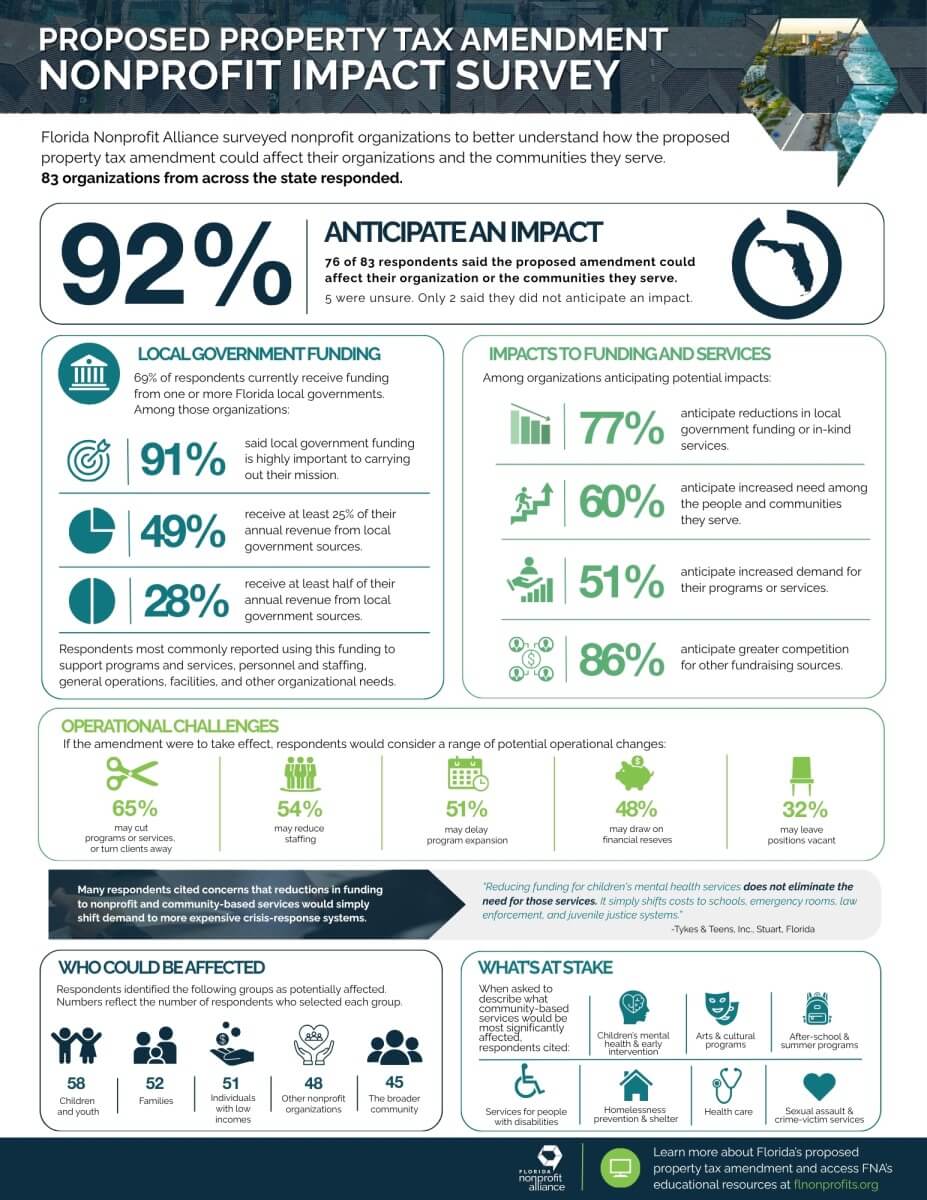
- Proposed Property Tax Amendment Nonprofit Impact Survey
In July 2026, Florida Nonprofit Alliance conducted a survey to measure Amendment 3's impact to nonprofit organizations, the communities they serve, and the local government partnerships on which many rely.
Key Takeaways Include:
- 92% of respondents said the proposed amendment could affect their organization or the communities they serve.
- 69% currently receive funding from one or more Florida local governments.
- 60% anticipate increased need among the people and communities they serve.
- 86% anticipate greater competition for other fundraising sources.
View Survey Results
10 Actions Florida Nonprofits Should Take Now
Amendment 3 has passed, but many important implementation decisions still lie ahead. While the long-term impacts will vary across communities, nonprofit leaders can take proactive steps now to prepare their organizations, inform decision-makers, and strengthen the sector's collective response.
1. Understand Your Exposure
Identify any funding connected to local government revenues, including county and municipal contracts, Children's Services Councils, housing and homelessness programs, public health initiatives, arts and culture funding, and other local investments. Understanding your organization's exposure is the first step toward effective planning.
2. Don't Focus Only on Year One
The full impact of Amendment 3 may not be felt immediately. Some communities may be able to soften short-term effects through reserves, one-time funding, or phased implementation. The greater challenge may emerge in Year 2 and beyond as recurring revenue losses accumulate and difficult budget decisions are made. Plan for the long term, not just the next budget cycle.
3. Engage Your Board Now
Bring your board and leadership team together to discuss potential risks, funding dependencies, planning assumptions, and community needs. This should be a strategic conversation focused on preparedness and resilience, not panic.
4. Quantify Your Community Impact
Be prepared to clearly communicate your impact. Organizations that can demonstrate impact with both data and stories will be best positioned for future funding conversations.
5. Develop Multiple Scenarios and Budget Conservatively
Prepare for several possible outcomes by developing best-case, moderate-impact, and high-impact scenarios. Identify the financial and operational triggers that would require action and determine your response before those decisions become urgent.
If your organization receives city or county funding, or support from partners whose revenues may be affected by Amendment 3, consider taking a more conservative approach to budgeting over the next several years. Avoid assuming current funding levels will remain unchanged as local governments evaluate long-term revenue impacts.
6. Pay Close Attention to Local Budget Discussions
Many of the most important decisions will happen at the local level. Attend county commission meetings, city council meetings, budget workshops, and public hearings. Help local leaders understand how nonprofit services support community well-being and what could be lost if funding is reduced.
7. Strengthen Financial Resilience
Review your reserves, cash flow projections, revenue diversification strategies, and contingency plans. Organizations with strong financial fundamentals and flexible funding sources will be better equipped to navigate uncertainty.
8. Document and Share Impacts Early
Your voice matters, but our collective voice is even stronger.
Most importantly, share what you're seeing by completing FNA's Nonprofit Survey. Real-time data will help FNA identify trends, elevate concerns, and advocate effectively as implementation unfolds.
9. Stay Connected to FNA
Many of the most important state-level decisions are still ahead. While nonprofits should remain engaged in local budget discussions, FNA will be closely monitoring the Amendment 3 special session, implementation legislation, and policy developments that could affect nonprofit organizations and the communities they serve.
10. Explore Collaboration Before Cutting Services
Periods of uncertainty often create opportunities for partnership and innovation. Communities are best served when organizations work together to preserve critical services, maximize resources, and ensure people continue receiving the support they need.
Resources for Nonprofit Leaders
 Amendment 3 Messaging Toolkit
Prior to the November 2026 election, FNA developed a messaging toolkit to help nonprofit organizations understand Amendment 3 and communicate its potential implications. The toolkit includes messaging guidance, an organizational communications framework, sample opinion editorial materials, and customizable social media graphics, including resources in Spanish and Haitian Creole.
Organizational Discussion Guide
FNA's discussion guide provides a starting point for conversations with your board and leadership team about funding dependencies, organizational preparedness, and future planning.