Results from the 2025 Florida Nonprofits Survey
Florida Nonprofit Alliance has released the results of the 2025 Florida Nonprofits Survey, presenting a detailed picture of a sector which remains deeply committed to serving communities across the state - even as the conditions under which nonprofits operate grows more challenging.
Florida Nonprofit Alliance has conducted regular surveys of the Florida nonprofit sector since April 2020, beginning in the early months of the COVID-19 pandemic. Three reports in 2020 and annual check-ins in 2021, 2022, 2023, and 2024 have provided ongoing insight into the sector’s strengths and the evolving challenges nonprofit organizations face.
The 2025 survey, which collected responses from 1,082 nonprofits across the state, sheds light on how organizations fared during the calendar year across six major areas: programs, human resources, finances, fundraising, recent external events, and barriers to sustainability.
Key findings of the 2025 report include:
Providing Programs is Getting Harder
Charitable nonprofit organizations exist to provide programs and services to support their missions. These programs and services are key to their impact in every community in our state. However, providing those programs to meet the demand in a sustainable way became more difficult in 2025.
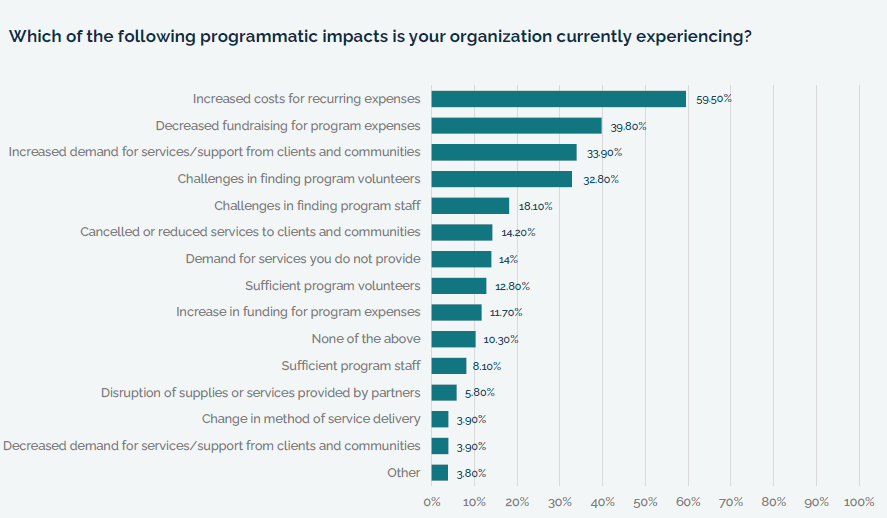
Nearly 60% of Florida nonprofits experienced increased costs for recurring expenses, while 40% raised less money for program expenses.
At the same time, organizations reported increased demand for services, forcing many nonprofits to stretch already limited resources in order to continue supporting their communities.
Nonprofit Staff and Volunteers Struggled More in 2025 Than in Recent Years
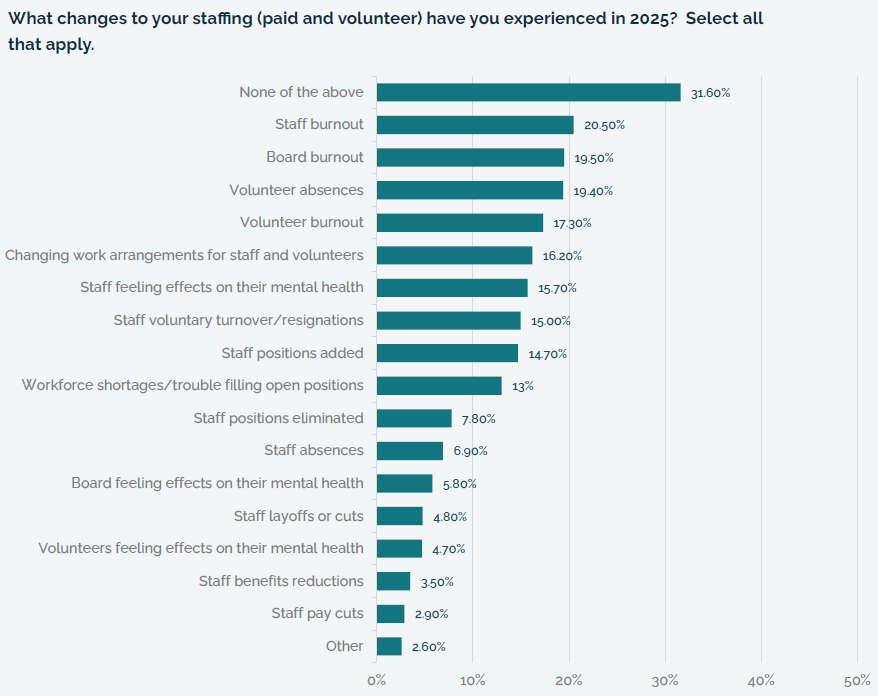
The staff and volunteers that run nonprofit organizations and provide the programs and services are the backbone of those organizations. However, Staff and board burnout are at their highest levels since 2021, with 20% of organizations reporting board member burn out and 16% reporting staff experiencing mental health impacts.
Financial Health Indicators are Slightly Improved from 2024 but Still Raise Red Flags About Long-Term Sustainability
To evaluate the financial health of Florida nonprofits, Florida Nonprofit Alliance tracks three key indicators: unrestricted revenue, budget growth, and reserve funds.
Some indicators improved slightly compared to 2024, but the survey results continue to highlight ongoing financial vulnerability within the sector:
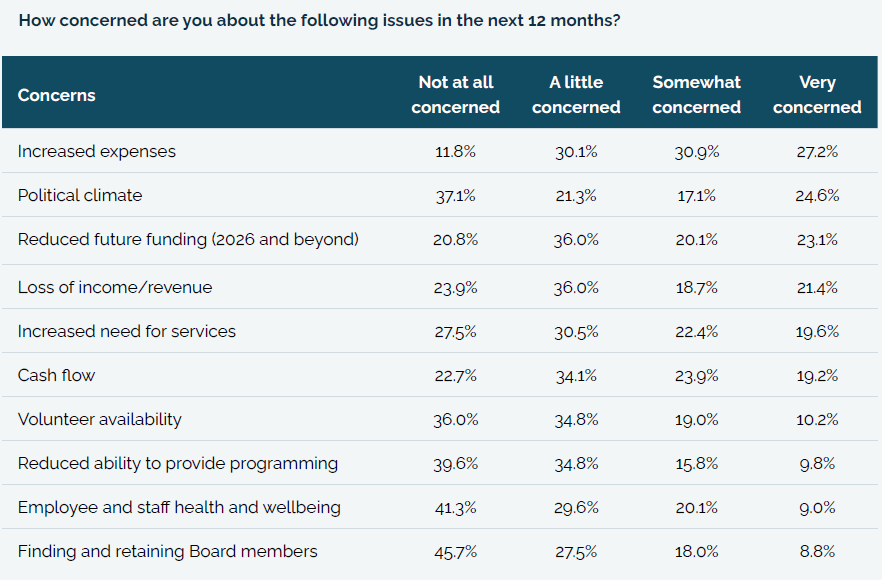
- 27% of nonprofits report they are very concerned about increased expenses, and 23% report they are very concerned about reduced future funding.
- Half of Florida nonprofits had a larger budget in 2025 than in 2024. 34% of those organizations reported providing more services, but 17% reported providing the same level or lower levels of services despite the budget increase, illustrating how increasing costs affect service delivery.
- Two-thirds of nonprofits saw no increase in the unrestricted revenue, the funding that allows organizations to strategically prioritize their spending, pay staff, and invest in capacity.
- 30% of respondents reported having no reserve funds at all. While this represents a 4% improvement from 2024, reserve funds are vital for long-term sustainability, providing financial cover for unexpected or major financial obligations.
Fundraising Remains the Biggest Concern and Challenge for Florida Nonprofits
Year after year, fundraising remains the greatest need and biggest challenge for nonprofit organizations in Florida.
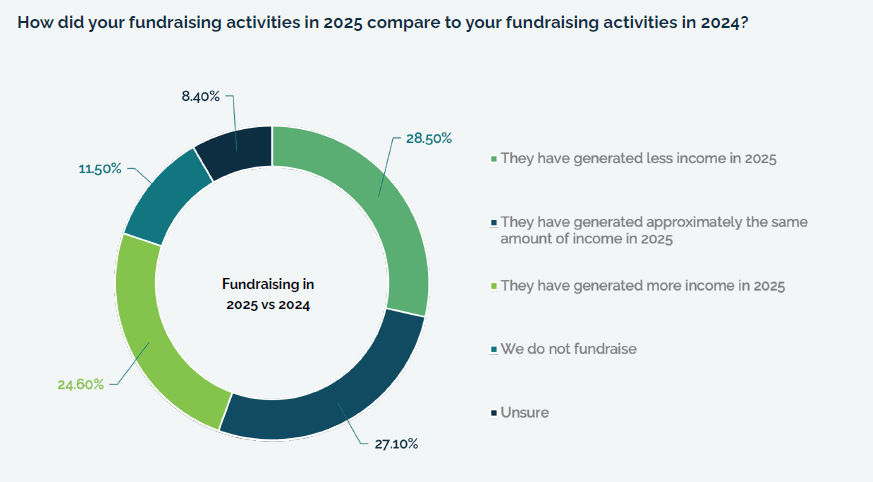
This year's results show that more than half of nonprofits did not raise more money in 2025 than they did in 2024, and when comparing what organizations expected to happen to their fundraising in 2025 with what actually occurred, they overestimated the success of new fundraising dollars by 5-13%.
External Factors Are Adding Pressure
About 30% of Florida nonprofits report that recent federal changes, decisions, or legislation have impeded their ability to provide programs and services. And while the 2025 hurricane season produced no direct hits to Florida, 12% of nonprofits reported they are still experiencing effects from the destructive 2024 season.
The 2025 Florida Nonprofits Survey Report also includes a regional analysis of survey results, allowing readers to explore trends and challenges across different parts of Florida.
The report concludes with practical ways nonprofit leaders, funders, elected officials, and community partners can use the data when working together to strengthen the nonprofit sector.
View The Full Report Here
Thank you to Wells Fargo for generously sponsoring this research.